Five layers for a Skjervøy whale boat
The air near Skjervøy in winter is only a few degrees below freezing, yet people come off the boats shivering. Wind and spray do the damage, along with hours of sitting still. This guide lists the five layers that work and what each tour lends you, plus ways to keep your gear dry and charged.
Colder at sea than on shore
Winter days on the coast near Skjervøy usually sit a few degrees below 0 °C (32 °F). That sounds mild for the Arctic, and on the harbor it often is. The sea does not freeze here, but the air moving over it bites.
Once a boat gets going, the wind it makes adds to whatever is already blowing. On an open RIB you also take spray, and damp fabric in a freezing wind loses its warmth fast. Expect it to feel much colder than the number on your phone.
Then comes the waiting. A good part of any whale trip is sitting still while the skipper scans the water, so your body makes little heat of its own. Dress for three hours of stillness, not for a brisk walk.
The five layers, from skin outward
- Wool base layer, top and long johns, merino if you have it, never cotton
- Mid layer, a fleece or a thin wool sweater that traps warm air
- Insulated jacket, down or synthetic, slim enough to fit under a suit
- Windproof shell, or the flotation suit your operator hands out
- Hat and two pairs of gloves, thin liners under thick mittens
Cotton is the one fabric to leave in the suitcase. It soaks up sweat on the bus or the walk to the harbor. Then it stays cold and clammy against your skin for the rest of the day.
Pack so you can peel a layer off. Tour buses and heated cabins are warm, and climbing onto the boat already sweating makes the first hour on deck much harder.
Boots, socks and hands
Feet go cold first on a boat, because you barely move them. Bring warm winter boots with a sole that grips on ice. Harbors and parking lots are often frozen even when the deck is not.
Wear wool socks, and pack a spare pair in a plastic bag. Several operators lend boots, and on those trips your own socks are the only layer between you and a borrowed sole.
Two pairs of gloves sounds fussy until you try to take a photo. Thin liners let you work a phone or camera for a minute, and the thick mittens go back on before your fingers stop obeying you.
What each tour hands out
| Tour | Boat | Supplied on the listing | Price |
|---|---|---|---|
| Arctic Adventure Tours | Open RIB, bus from Tromsø | Thermal flotation suit, boots, goggles, mittens, life vest | ~$343 |
| Frozen Frontiers | Open RIB, Skjervøy or Tromsø | Insulated flotation suit (XS to XXL), life jacket, boots and socks, mittens, goggles | ~$241 |
| Dervola Adventure | Heated cabin cruiser | Warm flotation suit, footwear, gloves | ~$284 |
| Skua Nature | Covered heated boat | No special suit needed | ~$279 |
A flotation suit keeps you afloat if you go in. It also keeps out the wind and the spray, but it is bulky, so a slim insulated jacket goes under it far more easily than a thick parka.
Skua Nature's covered heated boat from ~$279 needs no special suit, because you can step into the warm cabin whenever you like. The open observation terrace is still exposed, so dress as if for a long winter walk with no shelter.
Dervola's list of what to bring is short and sensible. It asks for warm clothing, warm shoes, a hat and gloves, even though a flotation suit and footwear wait on board for its cabin cruiser trip from ~$284.
Green Gold of Norway's 12-hour day from Tromsø, from ~$365, hands out flotation suits, mittens, balaclavas, waterproof boots and ski goggles. Its catch is the long list of medical limits on the listing, set out in who can join a Skjervøy whale tour.
Phones, cameras and bags
Cold drains batteries far faster than people expect. Keep your phone in an inside pocket close to your body and carry spare camera batteries there too. A cold battery often recovers once it warms up again.
On the RIBs, spray reaches everything. Arctic Adventure says cameras come at your own risk, so a waterproof bag helps, and Frozen Frontiers allows no luggage or large bags on board at all.
The cabin boats are kinder to gear. Dervola has dry storage for bags and camera equipment, and the wildlife photographers on Skua's boat give tips for shooting in the low winter light.
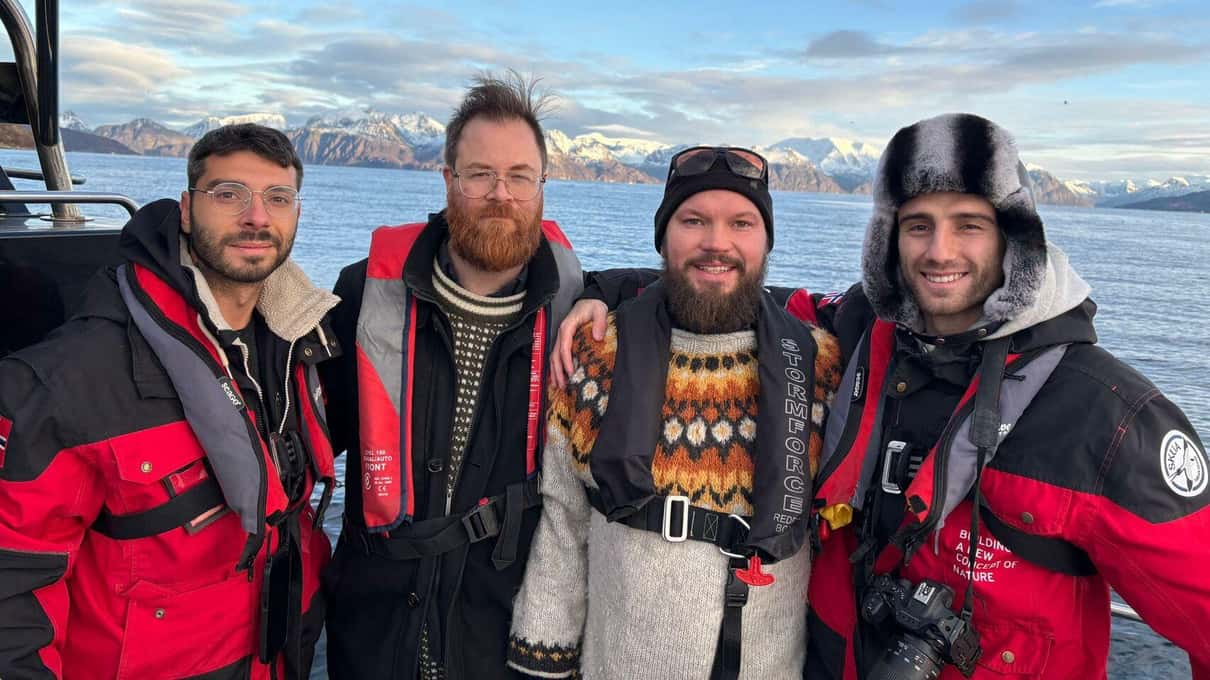
Suit, boots and mittens waiting at the boat
Arctic Adventure Tours lends the whole outer layer for about 3 hours on an open RIB, after a bus ride north from Tromsø. It rates 4.8 from 1,200+ reviews on GetYourGuide, the most reviewed tour on this site, from ~$343.
Dressing for the bus day
The Tromsø day trips start long before dawn. Arctic Adventure meets at 04:45 outside Scandic Ishavshotel, the bus leaves at 05:00 sharp, and you spend about eight hours on the road in total.
Wear your base layer from the hotel and carry the rest in a soft bag at your feet. The listings ask you to bring your own breakfast and snacks, and a warm drink in a flask helps on the long ride back.
Driving up to a harbor boat instead? Tromsø to Skjervøy in winter by car or bus covers the road and the ferry, and Tromsø day trip or Skjervøy harbor start helps you choose between the two plans.
A packing list for the boat
- Wool base layer, top and bottom
- Fleece or wool mid layer
- Slim insulated jacket
- Windproof shell, unless a suit is supplied
- Warm hat that covers your ears, plus a neck gaiter
- Thin liner gloves and thick mittens
- Wool socks and a spare pair
- Winter boots with grip
- Seasickness tablets if you are prone
- Breakfast and snacks for a Tromsø bus day
For rough water, rough sea or no whales off Skjervøy explains when to take tablets. What all this adds to the ticket price is in our cost guide. To see what you are dressing up for, read why orcas and humpbacks winter off Skjervøy.