Whales at noon, northern lights over Skjervøy at night
The whale season at Skjervøy falls in the darkest weeks of the year, which is also aurora time. That makes it tempting to try for both in one trip. It can work, but the timing of your whale boat decides how much energy you have left for the night.
Two sights, two halves of the day
Whale boats go out around midday to use the few hours of twilight. The northern lights need the opposite, a dark sky after the light has gone.
So the two do not compete for the same hours. The question is whether you still have the energy, and a free evening, once the whale part is done.
Neither sight is promised. Whale tours never guarantee sightings, and the aurora needs both solar activity and a clear sky, which nobody can book.
Why Skjervøy nights are dark
Skjervøy is a small fishing town on an island, a long way from any city glow. On a clear night the sky there is usually much darker than over Tromsø, which helps faint aurora show up.
During the polar night the dark starts early in the afternoon. You do not have to stay up until midnight to look, although the lights can appear at any hour of the night.
A dark sky only helps when it is clear. Darkness without clear weather shows you nothing at all, which is why the cloud forecast matters more than the hour or the date.
After a Tromsø day trip
Arctic Adventure Tours' Skjervøy RIB day, from ~$343, starts with a 05:00 bus from Tromsø and is back around 5:30 pm. That leaves the evening open in a city full of aurora tours.
A separate northern lights chase that same night is possible. After a 5 am start, about 8 hours on a bus and 3 hours of cold spray, most people would rather sleep, so a different night usually works better.
Whales by day, back in Tromsø for dinner
Our pick for travelers without a car rates 4.8 from 1,200+ reviews on GetYourGuide. The bus has Wi-Fi and a toilet on board. You get about 3 hours on the RIB, with suits and boots supplied.
Frozen Frontiers' RIB safari, from ~$241 from the harbor, also sells a version with a partner bus from Tromsø that returns in the early evening. That option costs more, so pick the right one at booking.
Green Gold of Norway's day from Tromsø, from ~$365, follows the same shape. Its catch is a 5:20 am start and another 12-hour day, so an aurora night straight after it asks a lot.
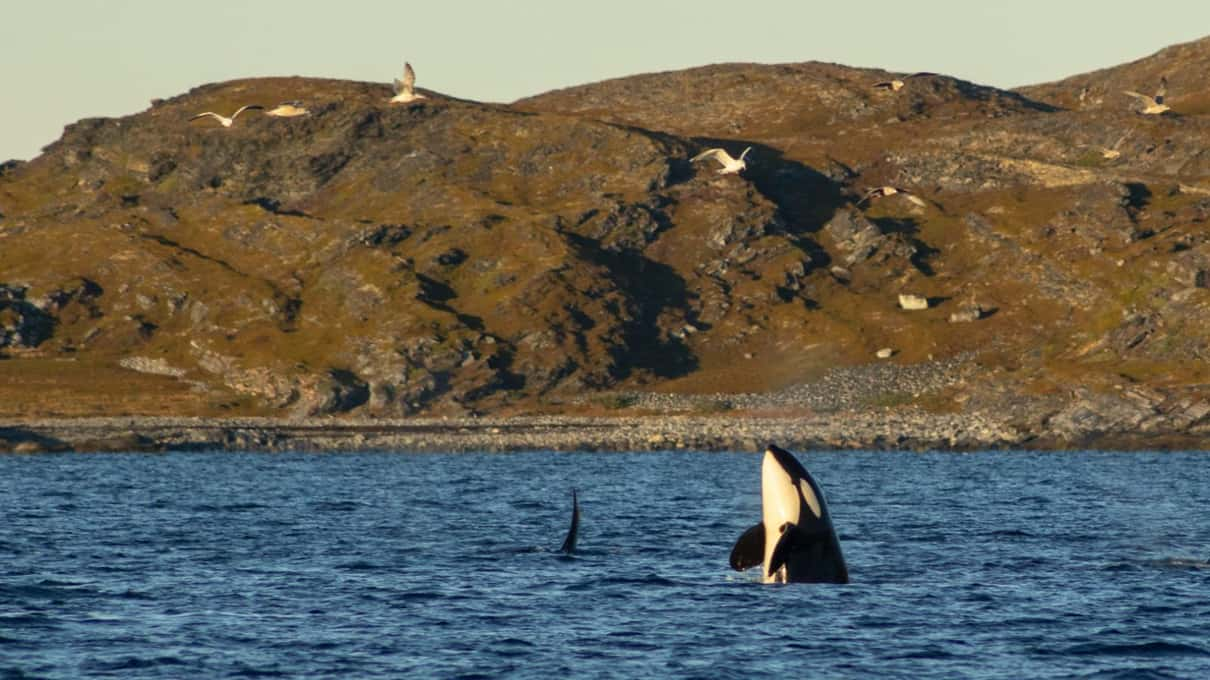
Staying in Skjervøy
Sleeping near the harbor changes the day completely. Dervola's heated cabin cruiser, from ~$284, starts at 9:30 am and returns around 2 pm, which leaves a long evening with no alarm at 4 am.
Skua Nature's heated boat, from ~$279, takes about 3.5 hours, so it also ends with time to rest before dark. You then step outside a small town with little light around it.
The trade-off is the journey north and a bed to find. Our comparison of the Tromsø and Skjervøy starts sets out who suits which.
Watching from the road
If you drive back toward Tromsø after a harbor boat, much of the trip is in the dark. On a clear evening you may see the aurora from the road, though there is no promise of it.
Pull over only where it is safe, away from bends and narrow stretches. The road deserves more attention than the sky, with ice and wind to handle and reindeer that wander onto it, and our route guide covers winter driving and the ferry.
Cloud on the coast
Cloud is common on this stretch of coast in winter, and it is the main reason aurora nights fail. A strong display behind thick cloud is invisible.
Check a cloud forecast in the afternoon and keep more than one night open if you can. The same spare day that protects your whale trip, as described in our plan B guide, also gives the sky a second chance.
The light and weather through the season are covered in the Skjervøy whale season, week by week. Darker weeks give longer nights, while early-season weeks give more daylight at sea.
A two-night plan
If you have the time, two nights in Skjervøy give you the most room. Day one is the drive north and an evening looking up, and day two is a harbor boat with the evening free again.
If the boat is cancelled or the sky stays grey, the next day still holds a second try at either. It costs a night's lodging, but it takes the pressure off fitting everything into one day.
Staying in Tromsø works too, with a different rhythm. Do the whale day first and rest that evening. Then join an aurora tour from the city on a later night, or head out on your own.
Dressing from noon to midnight
A whale boat and an aurora night both mean hours standing still in the cold. The boats supply flotation suits on the RIBs, but the night is on you.
Bring the same warm layers for both plus a hat and two pairs of gloves. Our guide to five layers for a whale boat works just as well on a dark roadside at 10 pm.
- Plan the aurora for a different night from a Tromsø day trip if you can
- Stay in Skjervøy for an early finish and a dark sky on your doorstep
- Watch the cloud forecast rather than the calendar
- Keep phone and camera batteries warm in an inside pocket